
The Royal Family talk about mental health issues in this short video. Prince Harry and Prince William address their difficulties growing up without their mother, Princess Diana, who died in 1997. Click to see this moving tribute to their mother and also the importance of reaching out for professional help when in need.
Category: Self-Esteem
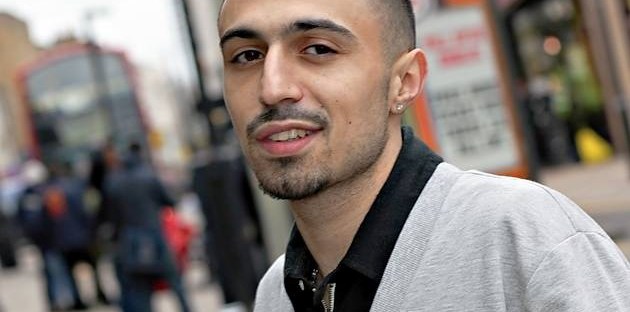
Actor Adam Deacon talks opens up about his problems
Talented young actor Adam Deacon seemed to have the British Film Industry at this feet. He had spent years building up a formidable reputation through playing a string of trouble hard men in films like Kidulthood, Adulthood, Everywhere+Nowhere, Comedown and Montana. He even directed and wrote a lively comedy spoof called Anuvahood. Having just wrapped up on Danny Boyle’s TV mini-series Babylon, it seemed to go wrong as he was reported to have engaged in a feud with fellow Brit-star Noel Clarke. The former friends fell out over Deacon’s film Anuvahood, which Clarke publically criticized as a the former’s attempt to piggy back on his success. Anuvahood, more like a spoof of Kidulthood and Adulthood, came and went on the cinemas to little fanfare but gained quite a following on D/L and DVD.
Adam Deacon has since gone public and explain what was behind his fall from fame.
Here’s a short clip from BBC 1Xtra where he explains the kind of help and care he received for his bi-polar condition (33 mins from the beginning).
LYP says: Adam is not alone and LYP are constantly working with young people who are desperate for help but the stigma of mental health is too much for them to admit to, until it’s too late. Not only that we constantly see that the system set up to help them has been fundamentally squeezed of financial resources to the point that there are very long waiting lists. We are really happy that Adam and others are wanting to talk about it and get help for it and we ask that the government takes a responsibility to solve the problem.

Love Young People supports Thorn
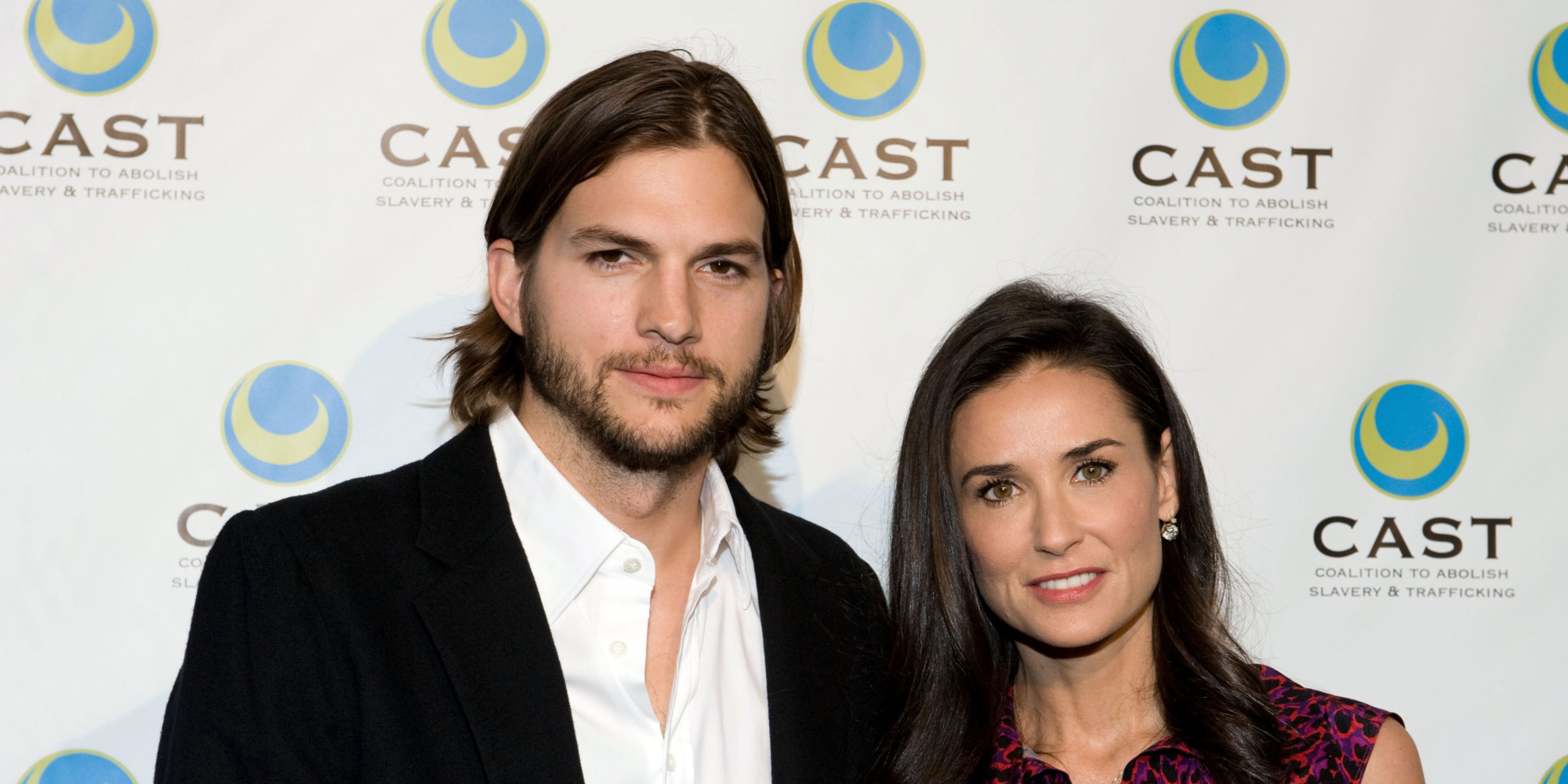
We support Ashton Kutcher and Demi Moore’s organisation Thorn. Founded in 2008, its purpose is to defeat human trafficers and child pornographers. In the last year it has tracked down 6,000 missing girls and boys. The actor’s are best known for having winning streaks at the cinema, predominantly in the 80s-00s; films like Dude Where’s My Car, Bobby, St Elmo’s Fire, Ghost, A Few Good Men, We’re No Angels and so many more.
The couple’s initiative is nearly ten years old is gaining traction the bigger the organisation reputation grows. Their cause is admirable and such a crucial one to raise awareness for as such abuse is ever-present and it’s a despicable evil that must be stamped out at all costs.
Here’s a clip of Kutcher talking on the Today Show, an American TV show where important people and celebrities are interviewed. He speaks about how Thorn has been working on digital tools to fight against websites where children and adolescents are bought and sold. “We’ve built a tool to help law enforcement prioritize their caseload, and recover victims and find traffickers,” he says about his organization’s efforts in 2016. “And we’ve found and identified and recovered over 6,000 trafficking victims this year. And we’ve found, identified and recovered 2,000 traffickers,” said Kutcher, during the interview. To see the whole interview, click here.

Mental Health Awareness Week 2017
Love Young People will continue to raise the public perception about mental health in the UK and our youth as part of our remit in schools. Last week was a very important time for us as it is a period that brings to light a very real issue. It’s also an area of health that needs constant attention and increased resource. NHS cuts are very pressing and dwindling funding to aid those most in need is a very real factor.
2017’s theme for Mental Health Awareness Week is ‘Surviving or Thriving?’ If you feel like your mental health might be getting you down, here’s two things you can do over the next week…
1) Read their brand new article on the selfharmUK website about how you can help to change how you might be feeling: https://www.selfharm.co.uk/articles/mental-health-awareness-week-2017
2) Check out their social media channels every day this week as we they be posting as many helpful links they can find all about how you can stop just surviving – and start THRIVING!! #MHAW17

Seven quick tips for teenage self-esteem
A feeling of self-worth can be elusive when you are young. Sign-posts are hard to find and your friends can’t always be your moral compass. You are standing on shifting sands with your parents. They love and care for you but how much do they really understand. Take a look at this cheat sheet for your parents and guardians. If not to print out, perhaps these can act as primers in conversation. Some points may be of more use than others.
At Love Young People, we elaborate and give you important exercises to work through to understand why it’s sometimes only natural to feel like an outsider, but that there are many of us that are in the same boat, and also come out of the other side.
- Set boundaries and expect your teen to follow rules
- Be generous with praise
- Encourage joint decision-making and invite opinions
- Stay connected through all forms of communication (social media / phone / talk)
- Be supportive during a conflict yet remain objective to rights and wrongs
- Keep criticism constructive
- Encourage and mentor their individual talents, but don’t be a showbiz parent
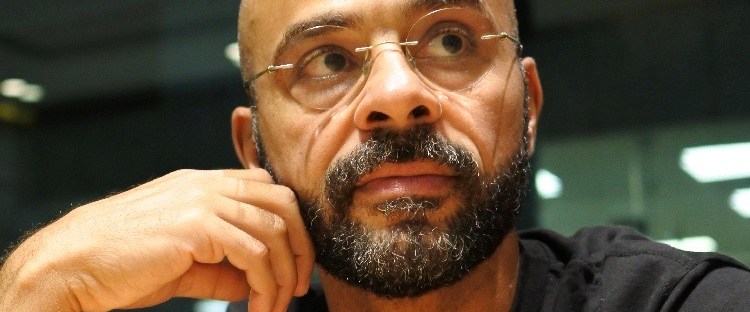
The formula for happiness
Recently a YouTube went viral on the World Wide Web claiming that an algorithm for true happiness had been discovered. Reading between the lines, this was simply a nice counter-balance to all the global anxiety felt at the moment being fed to us through our media channels. Mo Gawdat, the CEO at Google, lost his son and developed a grief coping method. By sharing this algortihm he believes he’s found a way of generating happiness.
The expression, ‘Glass half guy/girl – glass half-empty guy/girl…’ is a well-known tag used to over simplify our outlooks. Do you look on the bright side or is everything always stacked against you. The sad loss of his son gives this story gravitas, yet, it’s not a cure. But at least it’s a positive way through for us all to us and his sharing is the gift not the actual theory.
We wish there was a miracle over night cure for wellness and self-esteem but what Love Young People’s team can offer are lasting solutions that will endure and help you over time. Such click-bait makes for interesting discussions around the water cooler at school or work, yet on the positive side, at least this kind of ‘uplifting’ diversion exists. Does it amount to anything more than other click-bait showing dogs falling down the stairs or cats that look like Adolf Hitler?
We, at LYP, can help with happiness and well-being but we don’t have an algorithm.
Click here to make your own mind up. Is Mr Gawdat onto something?

Stormzy speaks about his battles with depression
Popular Grime MC, Stormzy spoke to Channel 4 News about his battle with depression. He implored young people to address the issue head-on and to seek help when they are feeling very lonely and isolated.
Stormzy addresses this depression on his next LP/CD/Download/Mixtape Gang Signs and Prayers, and speaks about the fact that even though he openly promotes positivity and confidence, he still has dark moments in private regardless of his personal successes.
For the full 25 minute interview visit: HERE
LYP says: We are grateful that celebrities like Stormzy are willing to talk about difficult issues like depression. We hope his message can help someone in real need.
Take a look, listen and pass it on.

Even the bubbly TV favourite Fearne Cotton has battled depression
Famous TV host and presenter has gone public and shared her experiences with depression. The effervescent TV and radio host always has a smile on her face, so it will be a surprise to many that Fearne Cotton used to take anti-depressants and has had her fair share of battle with depression and self-confidence issues.
Cotton has a new book on the market called Happy. She thought it was time to use her high profile to share with others how she overcame the affliction and how, sometimes, it’s possible to defeat it.
It was a few years ago that star Fearne was struck down with debilitating symptoms that made her realise something was wrong. “I had a real lack of energy,” she recalls. “I felt so drained and my lust for everything that I love wasn’t there any more.”
She says: “Since writing this book, lots of people opened up to me about being prescribed anti-depressants. After a few months, I felt that I was able to start, very slowly coming off them and looking for other options.”
Fearne was then able to review the way she was living her life and make some changes for the better, like cutting back on her social life
“Letting go of ‘perfect’ was important,” she says. “I was trying to do so many things and putting so much pressure on myself – and why? Perfect doesn’t exist. I cut back a lot on work, and focused a lot more on family.”
The book is available through major stockists and we recommend it highly as a ‘gateway’ book to begin to understand the effects of depression and it’s de-habilitating effects.
LYP says: It’s good to ease that someone as famous as Fearne Cotton can be so open and real in coping with her depression. Just because she’s famous it doesn’t mean she has to hide her feelings. We believe young people value other people who are willing to be vulnerable about their feelings, especially celebrities who are seen as perfect. Celebrities can bring more positive attention to issues like mental health and hopefully create more conversation to addressing these issues.

UK – Mental Health Statistics (Adults and Children)
Mental health issues, including depression and anxiety, especially amongst our youngest is a growing problem because of the decreasing funding pot across the board in the UK. Whether it’s our youth battling with their self-esteem or being the victims of sexual abuse, the access to professional getting ever more difficult. These statistics (credits at the end) demonstrate that the problems are not going away and remain a significant worry to aid professionals and those seeking much needed assistance.
- 1 in 10 children and young people aged 5 – 16 suffer from a diagnosable mental health disorder – that is around three children in every class (1).
- Between 1 in every 12 and 1 in 15 children and young people deliberately self-harm (2).
- There has been a big increase in the number of young people being admitted to hospital because of self harm. Over the last ten years this figure has increased by 68% (3).
- More than half of all adults with mental health problems were diagnosed in childhood. Less than half were treated appropriately at the time (4).
- Nearly 80,000 children and young people suffer from severe depression (5).
- Over 8,000 children aged under 10 years old suffer from severe depression (6).
- 72% of children in care have behavioural or emotional problems – these are some of the most vulnerable people in our society (7).
- 95% of imprisoned young offenders have a mental health disorder. Many of them are struggling with more than one disorder (8).
- The number of young people aged 15-16 with depression nearly doubled between the 1980s and the 2000s (9).
- The proportion of young people aged 15-16 with a conduct disorder more than doubled between 1974 and 1999 (10)
There is Key Data on Adolescence 2013 from the Association for Young People’s Health available here which has a section, Chapter 6, dedicated to Mental Health.
More detailed statistics
A more detailed analysis of the figures on depression, conduct disorders and anxiety in children are listed below.
Mental Disorders
The figures below are based on the finding of the latest ONS Child and Adolescent Mental Health Survey which was published in 2004 (11).
Any figures on the number of children with these disorders are estimates based on the prevalence rates found in this study and demographic data from the 2001 census.
- 9.6% or nearly 850,000 children and young people aged between 5-16 years have a mental disorder
- 7.7% or nearly 340,000 children aged 5-10 years have a mental disorder
- 11.5% or about 510,000 young people aged between 11-16 years have a mental disorder
Anxiety
- 3.3% or about 290,000 children and young people have an anxiety disorder
- 2.2% or about 96,000 children have an anxiety disorder
- 4.4% or about 195,000 young people have an anxiety disorder
Depression
- 0.9% or nearly 80,000 children and young people are seriously depressed
- 0.2% or about 8,700 aged 5-10 year-olds are seriously depressed.
- 1.4% or about 62,000 aged 11-16 year-olds are seriously depressed.
Conduct Disorders
- 5.8% or just over 510,000 children and young people have a conduct disorder
- 4.9% or nearly 215,000 children have a conduct disorder
- 6.6% or just over 290,000 young people have a conduct disorder
Hyperkinetic Disorder (Severe ADHD)
- 1.5% or just over 132,000 children and young people have severe ADHD
- 1.6% or about 70,000 children have severe ADHD
- 1.4% or about 62,000 young people have severe ADHD
LYP says: Mental health issues with young people are on the increase and the statistics are proving it. Unfortunately the resources that were there to provide a buffer or an intervention at an earlier stage are not around anymore due to severe government financial cut backs. God only knows what will happen over the next decade with young people’s mental health. This is where organisations like LYP can help provide highly effective ways of frontline work with students at risk of mental health issues before its too late. Get in touch today.
Sources
1 Green, H., McGinnity, A., Meltzer, H., et al. (2005). Mental health of children and young people in Great Britain 2004. London: Palgrave.
2 Mental Health Foundation (2006). Truth hurts: report of the National Inquiry into self-harm among young people. London: Mental Health Foundation
3 YoungMinds (2011) 100,000 children and young people could be hospitalised due to self-harm by 2020 warns YoungMinds. London: YoungMinds.
4 Kim-Cohen, J., Caspi, A., Moffitt, TE., et al (2003): Prior juvenile diagnoses in adults with mental disorder. Archives of general psychiatry, Vol 60, pp.709-717.
5 Green, H., McGinnity, A., Meltzer, H., et al. (2005). Mental health of children and young people in Great Britain 2004. London: Palgrave.
6 Green, H., McGinnity, A., Meltzer, H., et al. (2005). Mental health of children and young people in Great Britain 2004. London: Palgrave.
7 Sempik, J. et al. (2008) Emotional and behavioural difficulties of children and young people at entry into care. Clinical Child Psychology and Psychiatry, 13 (2), pp. 221-233.
8 Office for National Statistics (1997): Psychiatric morbidity among young offenders in England and Wales. London: Office for National Statistics.
9 Nuffield Foundation (2013) Social trends and mental health: introducing the main findings. London: Nuffield Foundation.
10 Collishaw, S. et al. (2004) Time trends in adolescent mental health. Journal of Child Psychology and Psychiatry, 45:8, pp 1350–1362.
11 Green, H., McGinnity, A., Meltzer, H., et al. (2005). Mental health of children and young people in Great Britain 2004. London: Palgrave.

Don’t get too caught up with your online persona.
Increasingly our young adults are making their online image as important as their actual image. So this is why online pressures are so much more consuming in your youth. As we get older we get busier. Facebook profiles become more about documenting travel and achievements, keeping in touch with old friends and reminiscing than the artificial excitement we experienced online when we were younger. Many young adults spend time immersed in fashion blogs looking to eradicate so-called imperfections, told to loose weight, told that with physical perfection and beauty happiness and riches will follow. Pinterest gets misused and the quotes used to fuel a self-hatred and depression, when the pictures are mainly there to inspire and generate happiness. Some escapes from reality become a dark flight rather than a positive voyage.
Forum conversations with strangers about the best angle to give the illusion of having a six pack or how to hide your flaws on SnapChat are of major importance. On one hand, our young people may feel alienated by day-to-day life and have found a place where people understand them. The mistake is to become over reliant on the internet and let it take over from reality and let it affect your outlook and ultimately your future. Too many people are letting the Internet and the media tell them how to act, look and behave. This flawed oracle is a false prophet and a quick fix. Children are expected to express themselves and to be themselves. The pressure is on for them to build self-esteem and also to find a way to be an individual but also not to alienate themselves from others in real life and online. It’s a thin line.
LYP says:
The impact of the Internet continues to transform the way young people identify themselves in new and extremely narcissistic ways. This is leading to a warped understanding of themselves and how they interact, relate and communicate with each other. It is not so unusual for young people to create separate personalities or personas for themselves, however this is being heightened by access of online technology which can change their image at a touch of a button. This does lead to pressure to perform and look perfect which leads to an unhealthy desire to be accepted and loved by their peers. Equally it also opens them up to be measured and judged unrealistically which may lead to rejection and hurt doled out by their ‘social’ circle. LYP works with schools to provide an early intervention strategy to help young people with their self-esteem issues before they they make consequential decisions based out of their emotions.
 Love Young People